Vehicle care in the UAE
8 Reasons Self-Healing Paint Protection Films Are Reshaping Car Care
Paint protection film has moved a long way from the thick, yellow-tinged vinyl that first appeared on rally cars in the 1990s. Today’s self-healing PPF is a clear, multi-layered polyurethane skin that repairs its own surface scratches when warmed by the sun, a hairdryer, or even a summer afternoon on Sheikh Zayed Road. For UAE owners dealing with sand, gravel, and constant washing, that changes the maintenance math completely.
Background
What paint protection film actually is
PPF is a transparent thermoplastic urethane film applied over factory paint. Modern products use a multi-layer sandwich: a top clear coat that resists chemicals and UV, an elastomeric polyurethane core that absorbs impact, and a clear adhesive layer that bonds to the paint without residue. It is typically installed on high-impact areas: the front bumper, hood, fenders, mirrors, headlights, rocker panels, and door edges. Full-body wraps are increasingly common on GCC-market performance cars.
Where older films yellowed within a couple of years, current polyurethane formulations stay optically clear for the life of the warranty, usually 7 to 10 years. According to industry references on PPF the film was originally developed by 3M for military helicopter blades, then adapted for automotive use.
The eight reasons owners are switching
- Scratches vanish on their own. Self-healing PPF uses elastomeric polymers with a form of shape memory. When the film is exposed to heat, whether from direct sun in Sharjah traffic or warm water from a wash, the polymer chains relax back into their original position. Fine swirl marks, wash-induced hairlines, and light contact scratches disappear within minutes. Deeper cuts that go through the topcoat cannot heal, but the vast majority of daily-driving marks can.
- Real defence against stone chips. The urethane core is soft enough to compress under impact and stiff enough to spring back. A gravel strike on the E11 near Abu Dhabi that would normally chip the clear coat is absorbed by the film, leaving the paint underneath untouched. This is where PPF genuinely outperforms ceramic coating.
- Sand abrasion no longer eats your bumper. Anyone who has driven through a shamal knows what airborne sand does to a front end. PPF’s sacrificial layer takes the abrasion instead of your paint, and because it self-heals, the surface stays glossy rather than becoming matte and hazy over time.
- Fewer polishing sessions. Traditional swirl-mark correction means light machine polishing, which removes a thin layer of clear coat each time. Do that four or five times over a car’s life and you have no clear coat left. Self-healing film absorbs the marks and undoes them, so the paint underneath is never touched by a pad again.
- Repainting becomes rare. A full panel respray on a European luxury car in Dubai routinely runs AED 3,000 to AED 8,000 per panel, and a full-body respray can push past AED 40,000. PPF pushes those events much further into the future, or eliminates them entirely for the areas it covers.
- Resale value holds up. Used-car buyers in the region inspect panels closely under lighting, and a car with original, unmarked factory paint commands a real premium. A JD Power industry note points out that documented paint condition is one of the top three visual factors buyers weight when comparing similar used vehicles. Removing the film before sale reveals paint that looks close to showroom condition.
- Chemical and UV resistance built in. The topcoat resists bird droppings, tree sap, insect acids, and fuel splashes, all of which can etch unprotected clear coat within hours in UAE heat. UV inhibitors keep the film clear and stop the paint underneath from fading, which matters for reds, blacks, and dark blues that show oxidation first.
- It pairs well with other protection. Many detailers now layer a ceramic coating on top of PPF. The film handles impact and abrasion; the ceramic makes the surface hydrophobic and easier to clean. Combined with regular professional exterior detailing the result is a finish that shrugs off dust, water spots, and light contact for years.
How the healing actually works
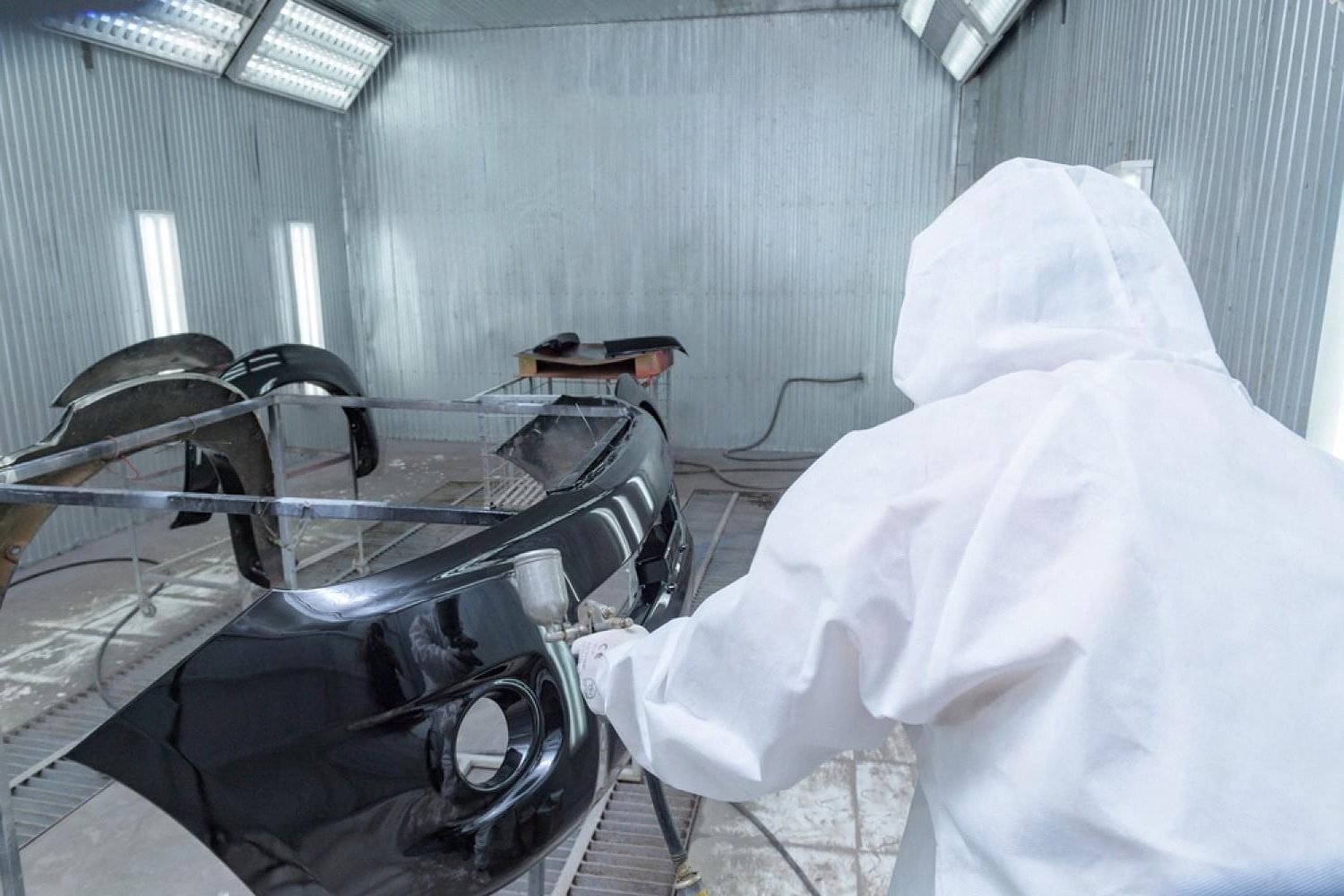
The elastomeric polymer in the topcoat is engineered with cross-links that behave like tiny springs. A scratch deforms those links but does not break them. Add energy, usually as heat above roughly 40 to 50 degrees Celsius, and the links pull the surface back into its molecular resting shape. In practical terms, this means a UAE-parked car heals faster than one sitting in a Berlin winter, because ambient temperatures do most of the work.
There is a limit, though. Scratches that penetrate the topcoat and reach the adhesive layer are permanent. Sharp keys, deep parking-lot gouges, and hard impacts on edges will still leave a visible mark. The technology is designed for the huge middle band of damage, roughly 80 to 90 percent of daily scratches, that used to require polishing or repainting.
PPF versus ceramic coating at a glance
Impact protection
PPF absorbs stone chips and gravel strikes. Ceramic coating cannot; it is only a few microns thick and offers no cushioning against physical impact.
Scratch behaviour
PPF self-heals fine scratches with heat. Ceramic hardens the surface but does not recover from marks; damage that gets through it usually reaches the paint.
Cost and lifespan
Ceramic runs roughly AED 1,500 to AED 4,000 and lasts 2 to 5 years. Full-front PPF starts around AED 3,500 and full-body wraps range from AED 12,000 to AED 25,000, with 7 to 10 year warranties.
On the road
Why UAE conditions punish unprotected paint
Desert highways feed a constant supply of airborne sand and small stones. High cruising speeds on the E11, E311, and E611 turn ordinary gravel into paint-cutting projectiles. Frequent washing, often more than once a week during dust season, introduces micro-marring from mitts and towels even at reputable facilities.
Combined with 45-degree summer surface temperatures that soften paint and accelerate any chemical etching, the local environment is unusually harsh on factory finishes. PPF is one of the few interventions that addresses all of those pressures at once.
Where the market is heading
Hydrophobic films
Newer PPF products bake hydrophobic properties directly into the topcoat, so water beads and rolls off without a separate ceramic layer.
Ceramic-infused PPF
Hybrid films combine urethane’s impact resistance with a ceramic-loaded topcoat for extra chemical resistance and a harder gloss.
Longer warranties
Ten-year and even twelve-year manufacturer warranties are becoming standard, and sustainability-focused brands are shifting toward lower-VOC adhesives and recyclable liners.
The cost of protecting paint has fallen faster than the cost of repainting it. That single line explains why every second luxury car we deliver leaves the shop wrapped.
Is it worth it?
For daily drivers of modest cars, a good ceramic coating plus careful washing is often enough. For anyone spending real money on a vehicle, whether that is a G-Wagen, a Range Rover, an M-car, or a supercar, the calculation tilts sharply toward PPF. The market data agrees: Grand View Research tracks the global automotive PPF segment growing at a double-digit annual rate, with the Middle East among the faster-growing regions thanks to a large luxury-vehicle base and unforgiving driving conditions.
The self-healing generation of films has closed the gap between what buyers expect from paint protection and what the technology can actually deliver. That is why more UAE owners are treating PPF less as a luxury upgrade and more as a standard part of taking delivery of a new car.
Frequently asked questions
How long does self-healing PPF last in UAE weather?
Reputable brands carry 7 to 10 year warranties, and in the UAE that timeframe holds up well because modern topcoats include strong UV inhibitors. Constant high temperatures actually help the self-healing function rather than degrade the film. Expect a decade of service if the film is professionally installed and the vehicle is washed with care.
Does the sun in Dubai really trigger the self-healing effect?
Yes. The elastomeric topcoat starts recovering scratches once the surface passes roughly 40 to 50 degrees Celsius. In summer, panels sitting in direct sun easily exceed 60 degrees, so light swirl marks and wash scratches often disappear within an hour of parking outside. In cooler months, warm water during a wash or a heat gun during a detail achieves the same result.
Can self-healing PPF fix every scratch?
No. The film heals surface-level damage that stays within the topcoat, which covers the majority of daily marks: swirls, wash marring, light branch scrapes, and fine scratches. Damage that cuts through the topcoat into the adhesive or the paint underneath is permanent and usually requires a panel of film to be replaced.
Is PPF better than a ceramic coating?
They solve different problems. Ceramic coating adds gloss, hydrophobic behaviour, and mild chemical resistance, but it offers no protection against stone chips or abrasion. PPF provides physical protection against impacts and abrasion and heals its own scratches. Many owners use both, with PPF on the high-impact front end and ceramic across the whole car.
How much does a PPF installation cost in the UAE?
Prices vary by brand, coverage, and installer. A partial front kit, covering bumper, hood edge, mirrors, and headlights, typically starts around AED 3,500. A full front covers the entire bonnet and fenders and ranges from AED 6,000 to AED 12,000. Full-body wraps on luxury cars fall between AED 12,000 and AED 25,000, and can exceed that on supercars.
Will PPF damage my factory paint when it is removed?
Quality PPF is designed to be removed cleanly without lifting paint, provided the paint underneath is original factory finish in good condition. Repainted panels are a different story: aftermarket paint can be softer or poorly cured, and the film’s adhesive may pull it up on removal. A reputable installer will inspect and warn you before wrapping repainted panels.
How should I wash a car wrapped in PPF?
Standard hand washing with pH-neutral shampoo, a clean mitt, and the two-bucket method is ideal. Avoid automated brush washes, which can lift the film edges over time. Touchless washes are fine. Bird droppings and insect residue should be cleaned off within a day or two even though the topcoat resists them, because prolonged contact can leave a faint outline.
Hiking addict, ramen eater, music blogger, Swiss design-head and screen printer. Operating at the fulcrum of design and function to craft meaningful ideas that endure. Check me out on Dribbble or Medium.